AI + Creative Direction
AI-Powered Trend Presentation
How I used AI as a creative partner to build an interactive S/S 27 trend forecast — concept to launch in days, not weeks.
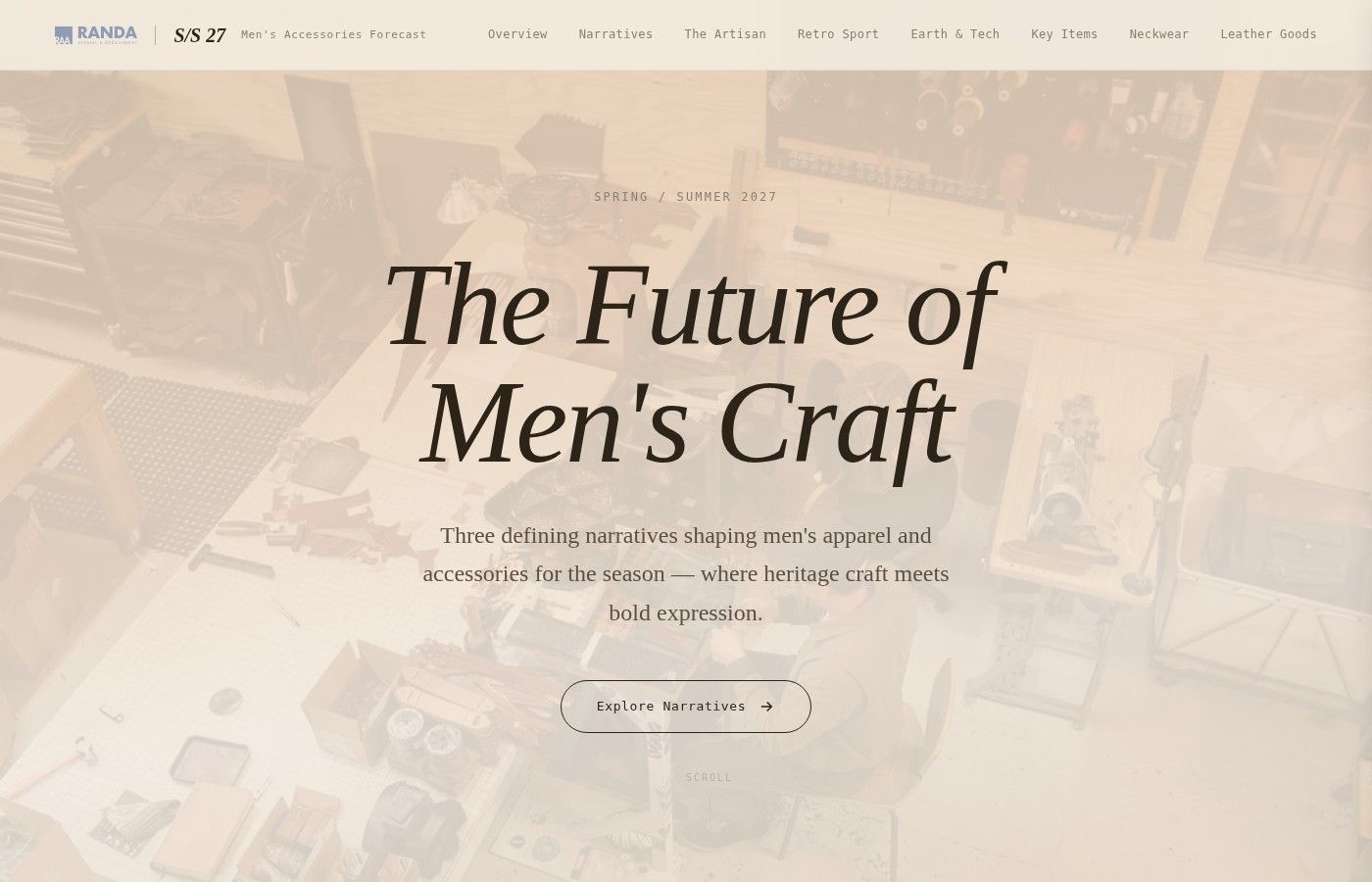
Seasonal trend presentations are how creative directors communicate vision to design teams, merchandisers, and retail partners. Traditionally, they take weeks.
Coordinating with graphic designers, iterating on layouts, assembling static PDFs or slide decks that can feel flat next to the richness of the trends themselves. I saw an opportunity to rethink it entirely: what if I could use AI as a creative collaborator to build something more ambitious — an interactive, web-based trend experience — while dramatically compressing the timeline?
The S/S 27 Trend Forecast — built with AI
AI as creative partner
I used Claude as my primary development partner — but this wasn't about handing creative decisions to a machine. I brought 16+ years of trend forecasting, brand strategy, and a clear creative vision. The AI brought the ability to rapidly prototype, code, and iterate on the technical execution. Think of it like directing a production: I was still the creative director making every aesthetic and strategic call, and the AI functioned like an incredibly fast, tireless production team translating my direction into polished output in real time.
I was still the creative director making every call. The AI was the production team — fast enough to keep up with the ideas.
On directing the build
The process
1 · Strategic foundation
I started where I always start: with trend research. Drawing on market analysis, competitive shopping, and cultural signal-reading, I developed the S/S 27 direction. Three core themes emerged — Retro Revival, Earth Elements, and Artisan Craft — each with distinct color palettes, material stories, and mood directions.
2 · Directing the AI build
With the strategy defined, I worked with the AI to translate trend direction into an interactive web experience — art-directing every detail: typography, color systems, image layouts, animation timing, and the editorial rhythm of each page.
3 · Iterative refinement
The real power showed in iteration speed. Where a traditional layout revision might take a day of back-and-forth, I could review, redirect, and see updated results in minutes — compressing weeks of production into days without compromising the craft.
Why it matters
This is a glimpse of where creative direction is heading: expertise and taste become more valuable, not less, when the cost of execution drops. The director who can clearly articulate a vision — and direct AI to realize it — can move from idea to a rich, interactive deliverable faster than ever. That's a multiplier on creative leadership, not a replacement for it.