Directing a Licensed Portfolio of 11+ Brands
Directing design for all 11 licensed brands every season, from trend through licensor approval, and sharing creative direction for the photoshoots and buyer presentations.
Role
Design Director and Senior Design Director
Team
Designers in US and overseas offices
Partners
Licensor brand teams, merchandising, sales
Brands







At a glance
Challenge
Eleven licensed brands shared one design team, one calendar and the same factories, and each still had to look like itself.
What I did
Directed design every season, ran the design reviews with teams in the US and overseas, and co-directed the photoshoots and buyer presentations.
Result
11Licensed brands directed each season, every collection approved by the licensor’s own brand team.
Eleven brands, one team
Eleven licensed brands, one design team, one calendar and a shared set of factories. Keeping each brand authentic and distinct inside that system was the job.
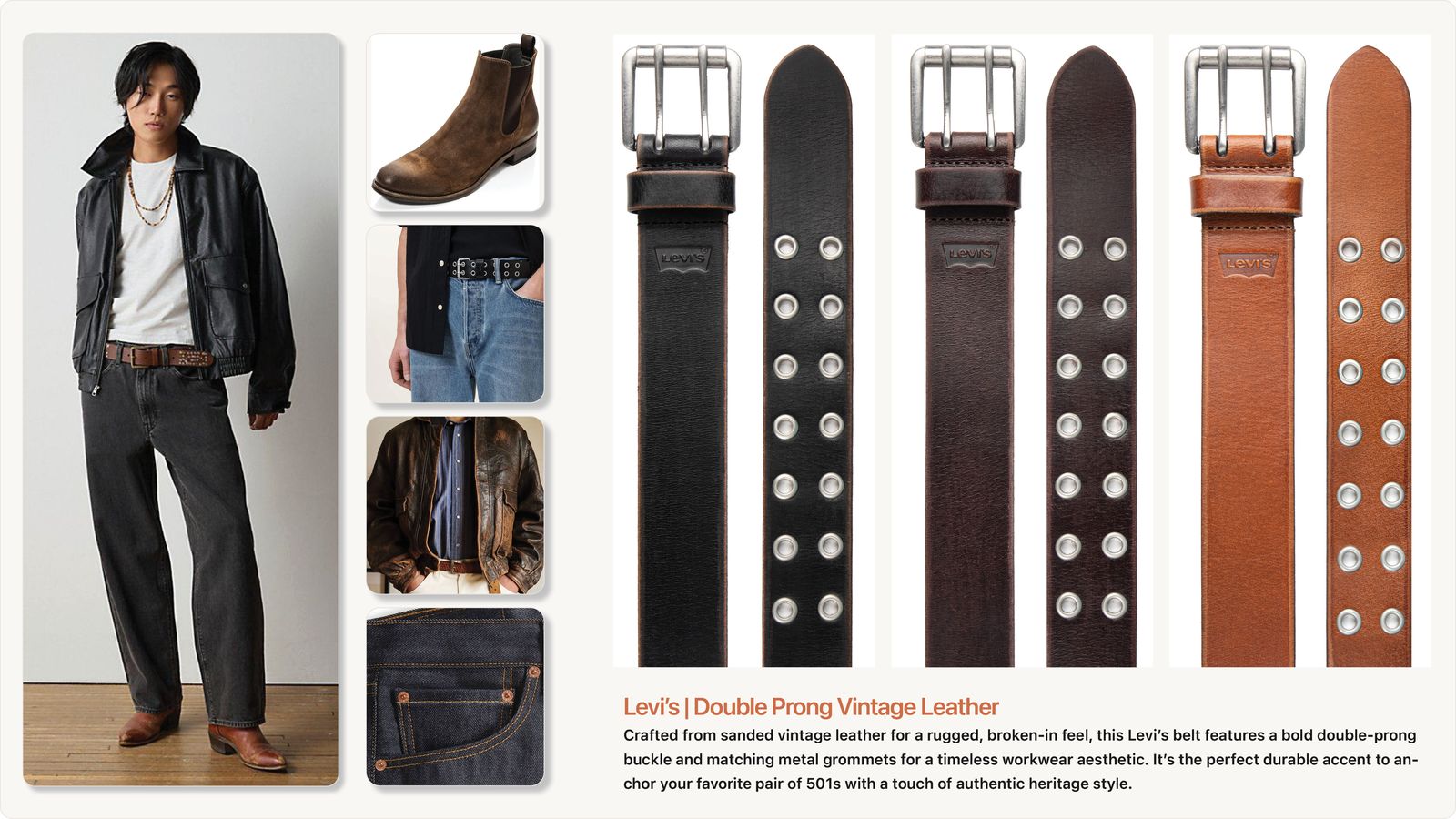
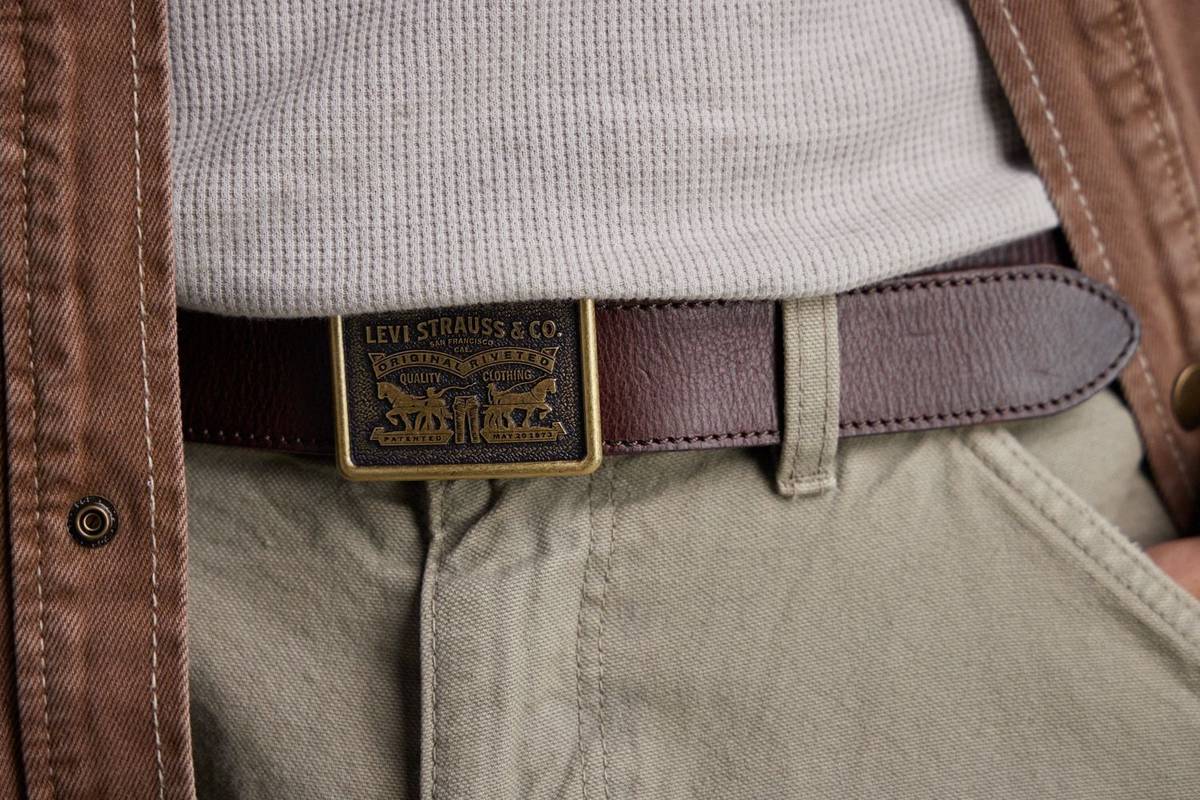
Each season I directed design for all 11 brands, from Levi’s workwear Americana to Calvin Klein’s minimalism to Kenneth Cole’s sharper city look. A Levi’s belt has to feel like Levi’s, and a Calvin Klein belt has to feel like Calvin Klein, no matter how many designers and factories touched them.
I combined each brand’s own trend direction with ours, gave each brand its own place in the market, and took every collection through approval with the licensor’s brand team. The trend process has its own case study: Setting Each Season’s Trend Direction.
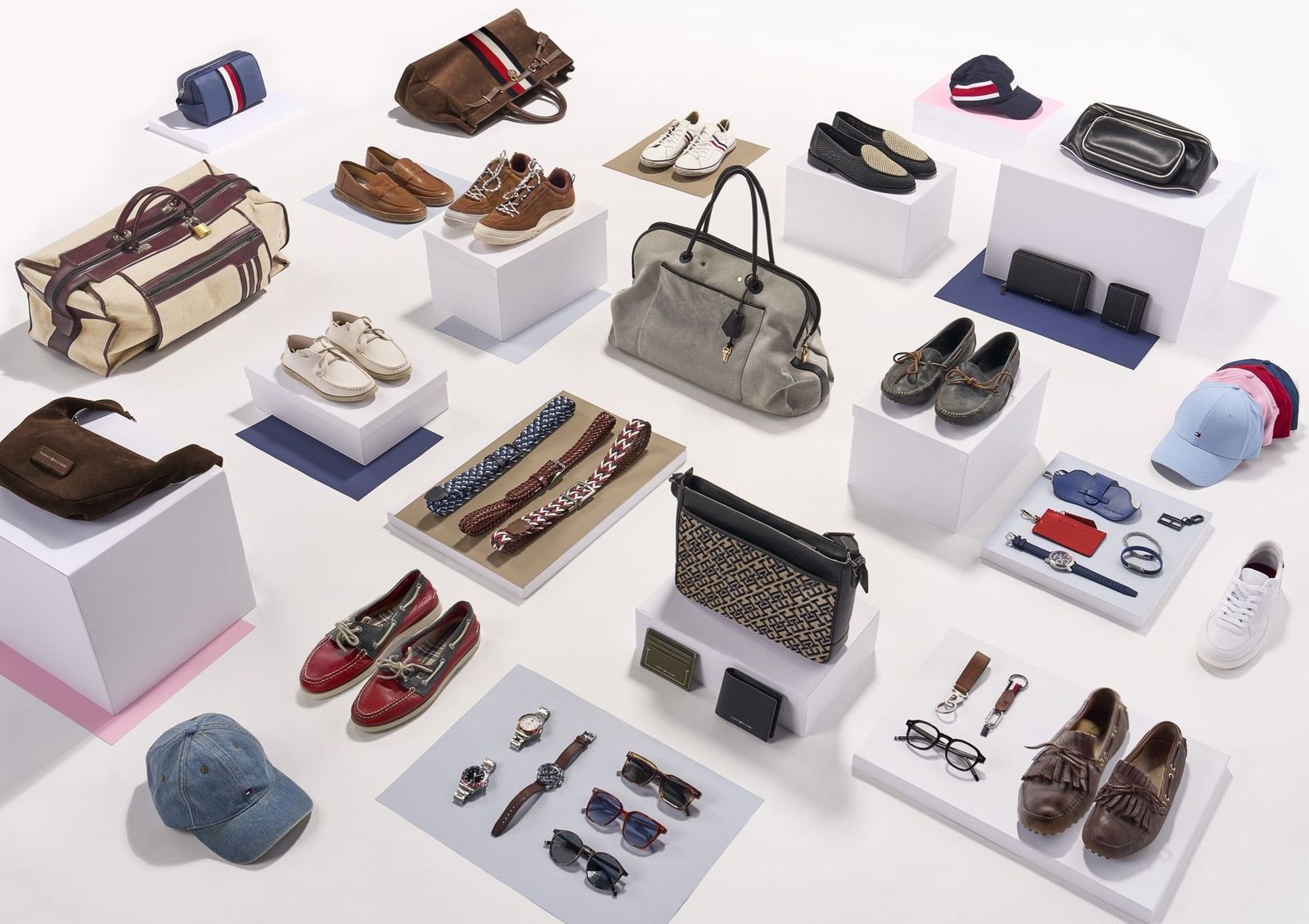
Working with licensed brands also means aligning with other categories I don’t work on. The challenge is that by the end of the season, a brand has to come together as if it was done by one team.
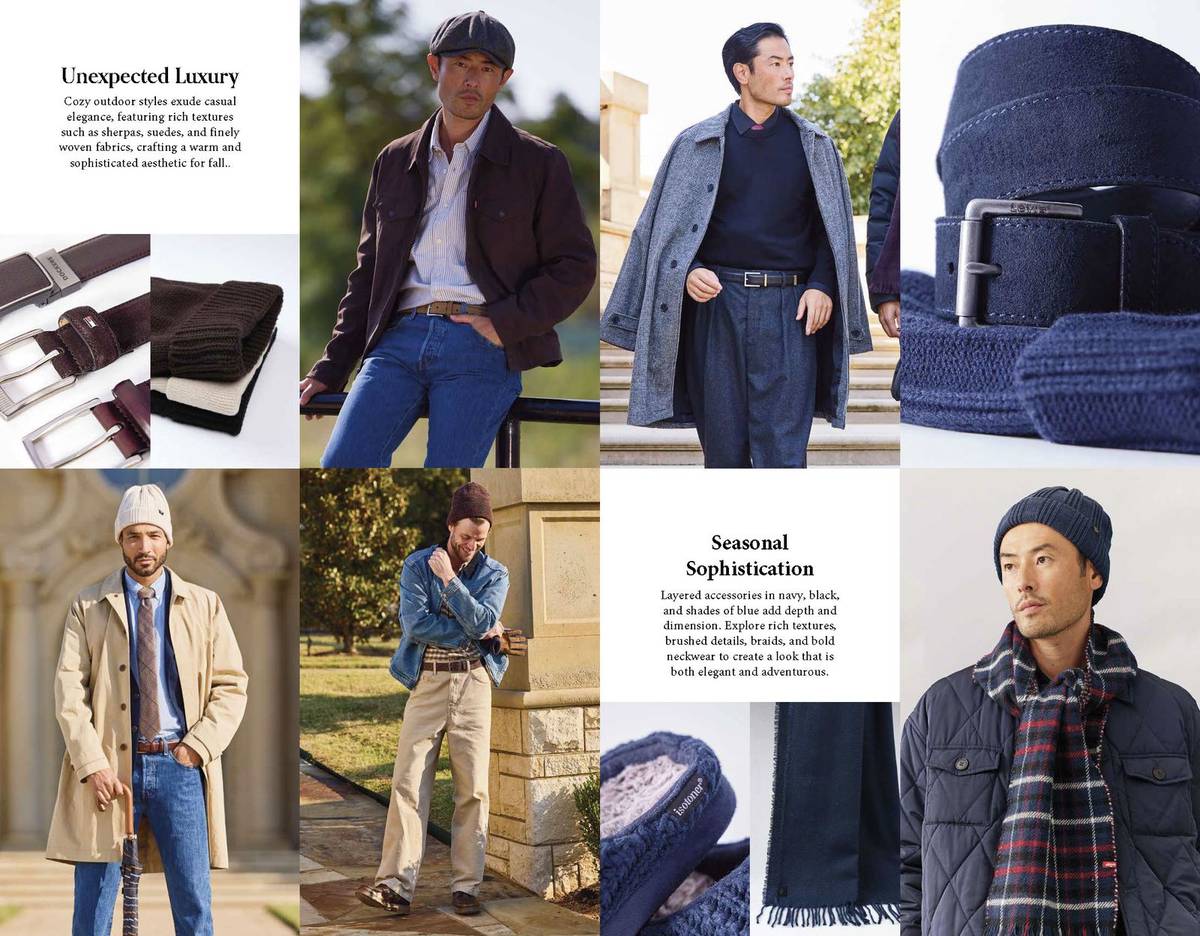
The collection above is Tommy Hilfiger. It includes product from many different accessories categories, and it comes together in one seasonal look that is authentic to the brand.
Design development and review
Designers went to work taking the trend and designing a collection using sketches, Illustrator and, most recently, generative AI tools. I ran the reviews, giving feedback to designers in the US and overseas as the work came in, so each collection moved its brand forward and could still be made at the right cost.
Internal reviews happened behind the scenes, before anything went to the licensors for approval. Once the CADs were approved by each licensor, we moved on to tech packs and production.
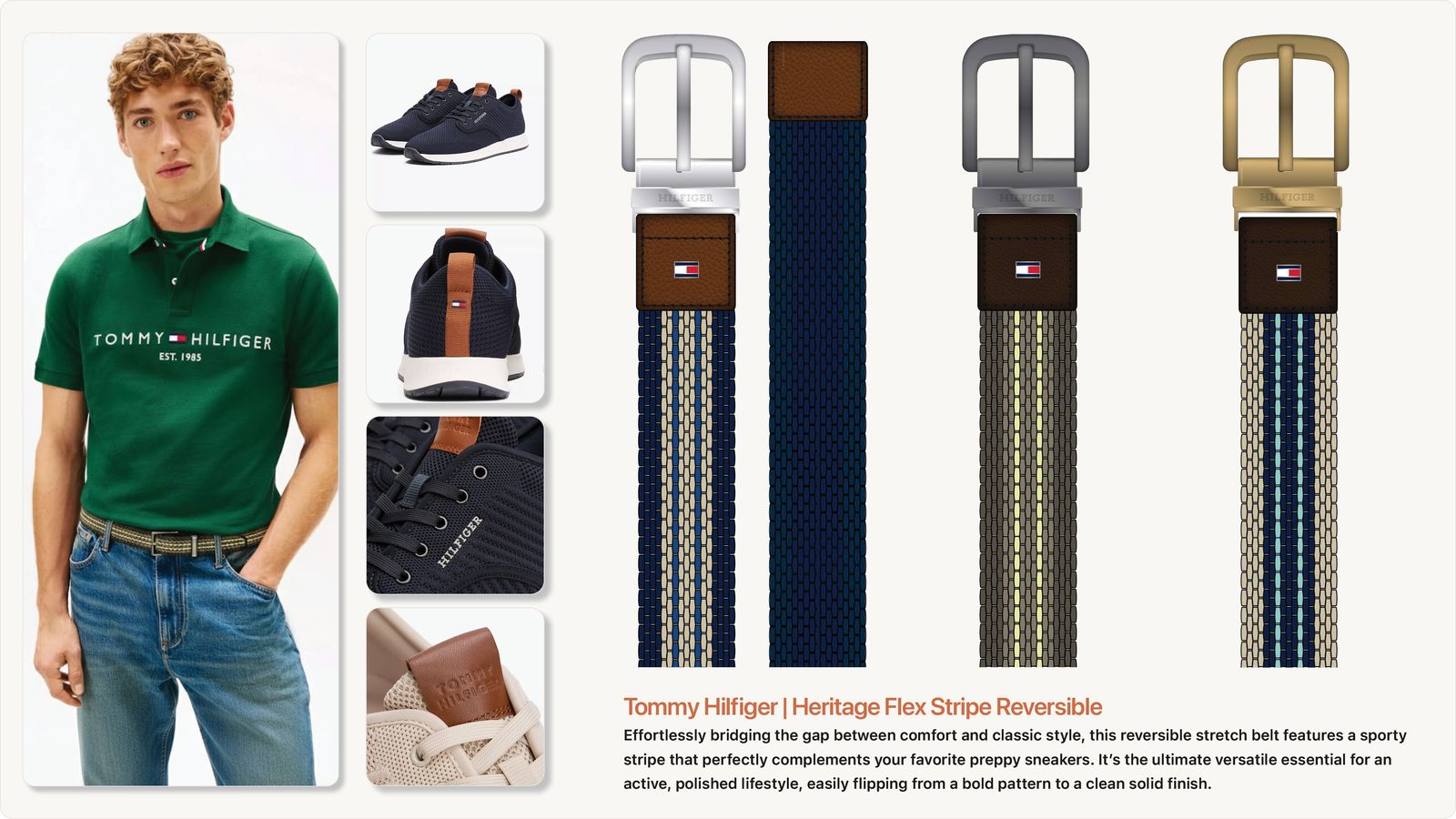
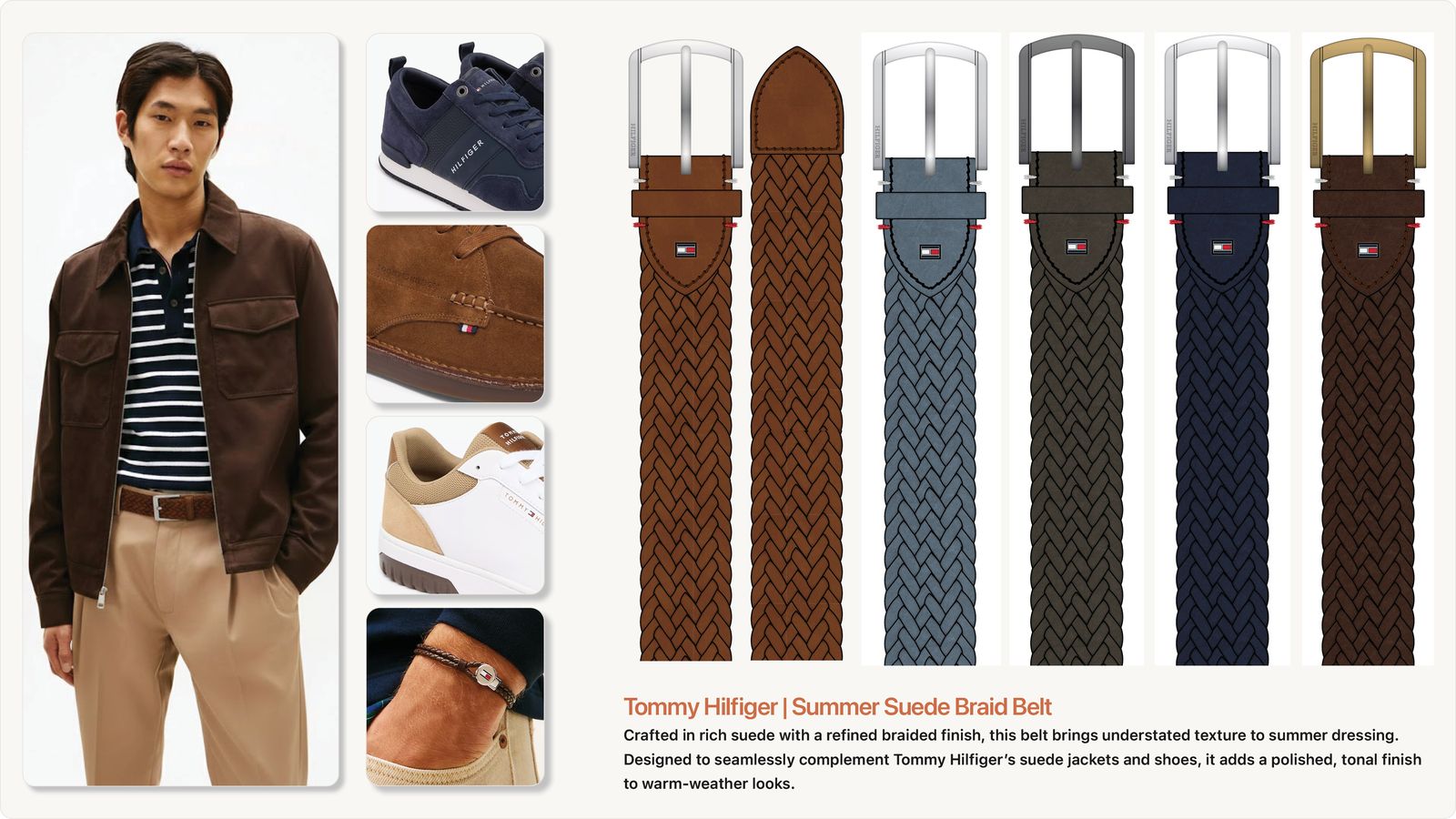
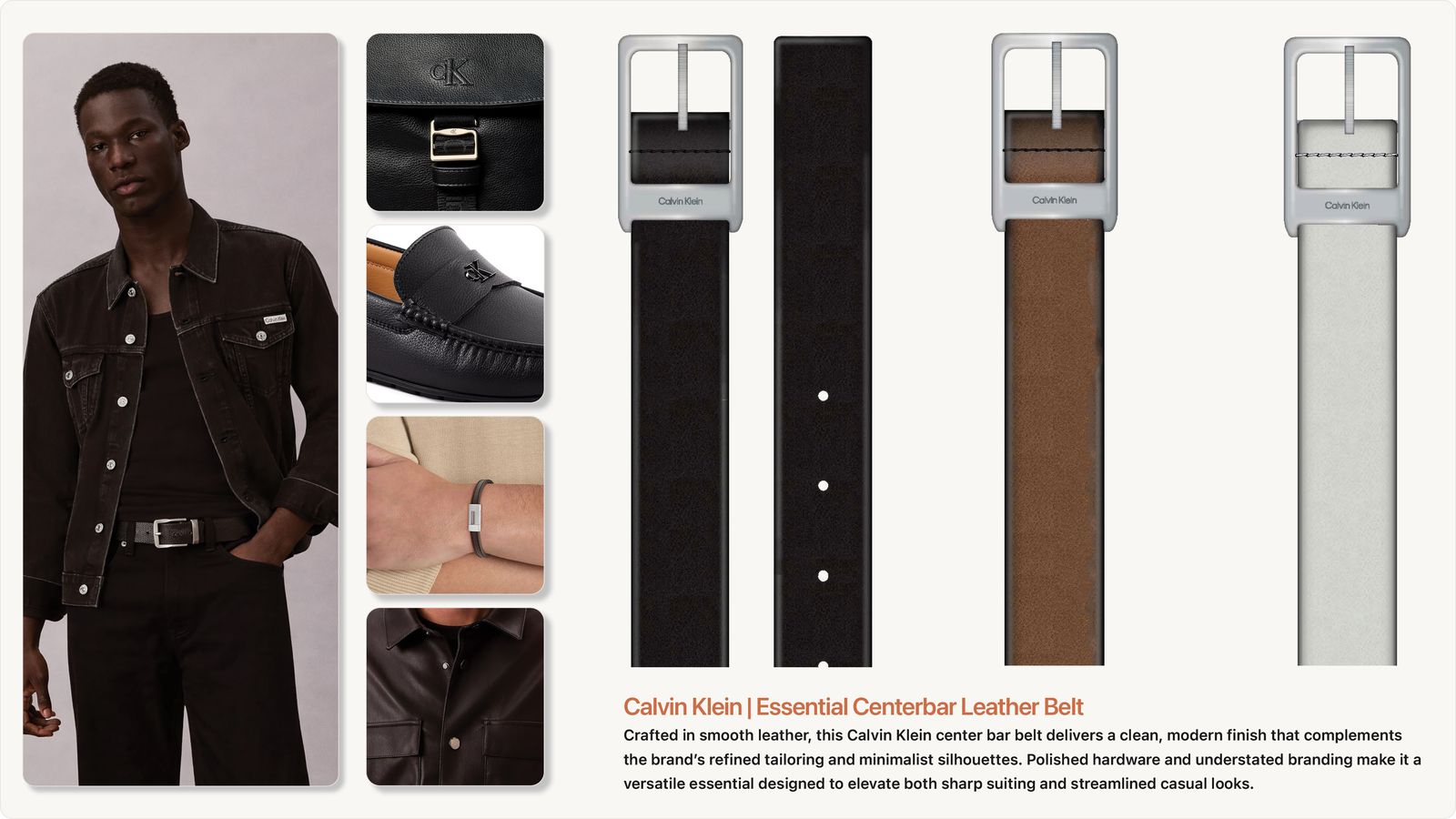
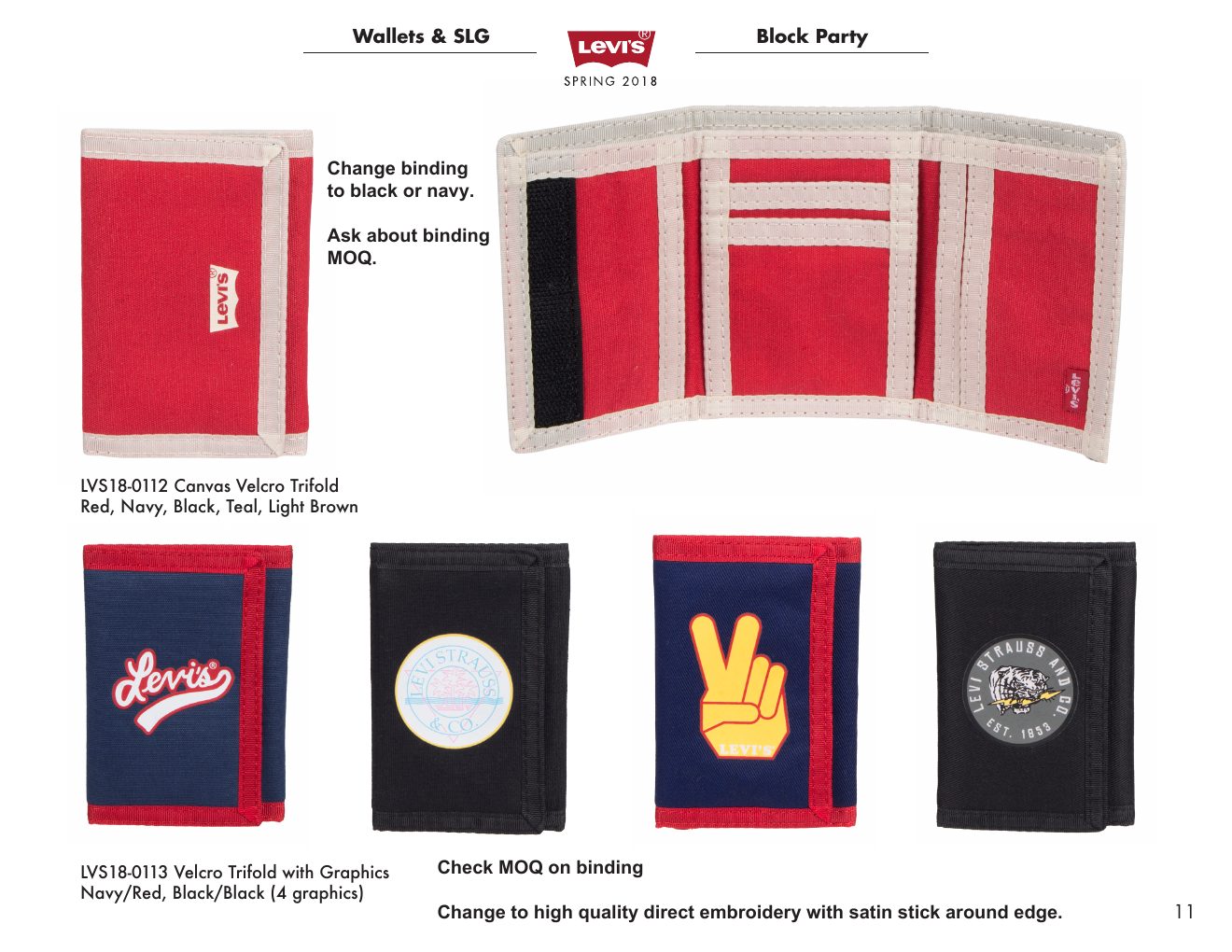
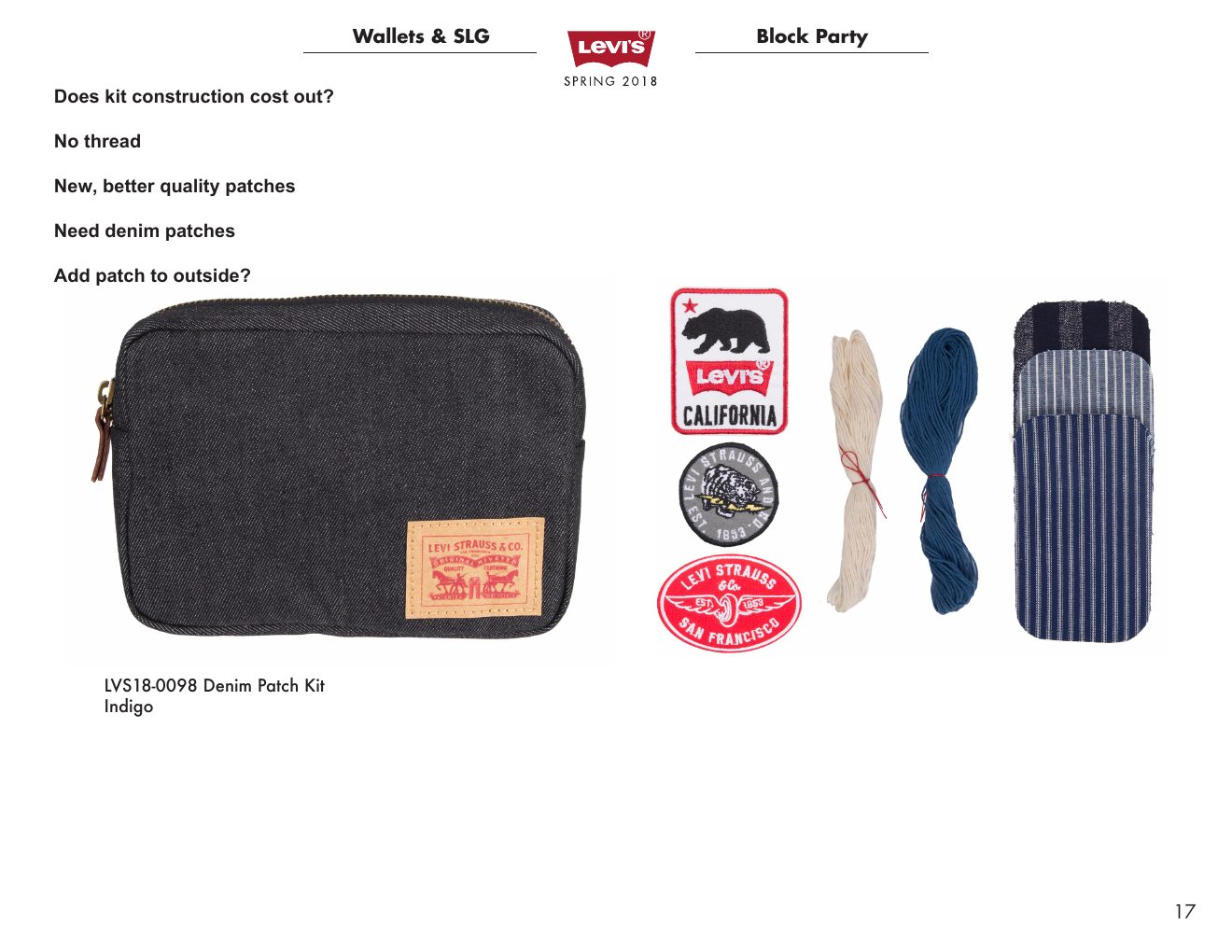
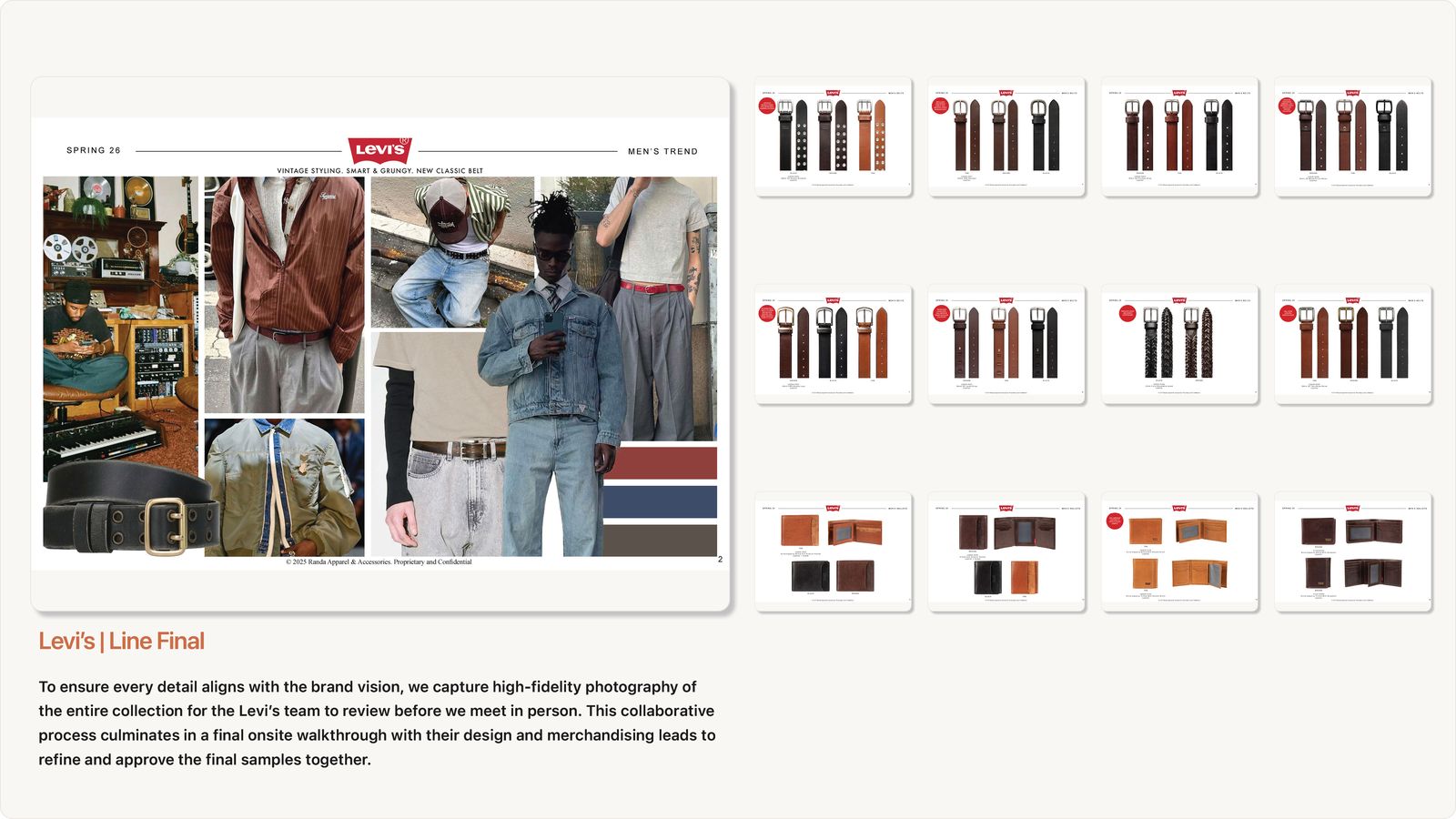
Pages from a Levi’s Mid Point review, with notes from the meeting added for the next round.
Tech packs, samples and production
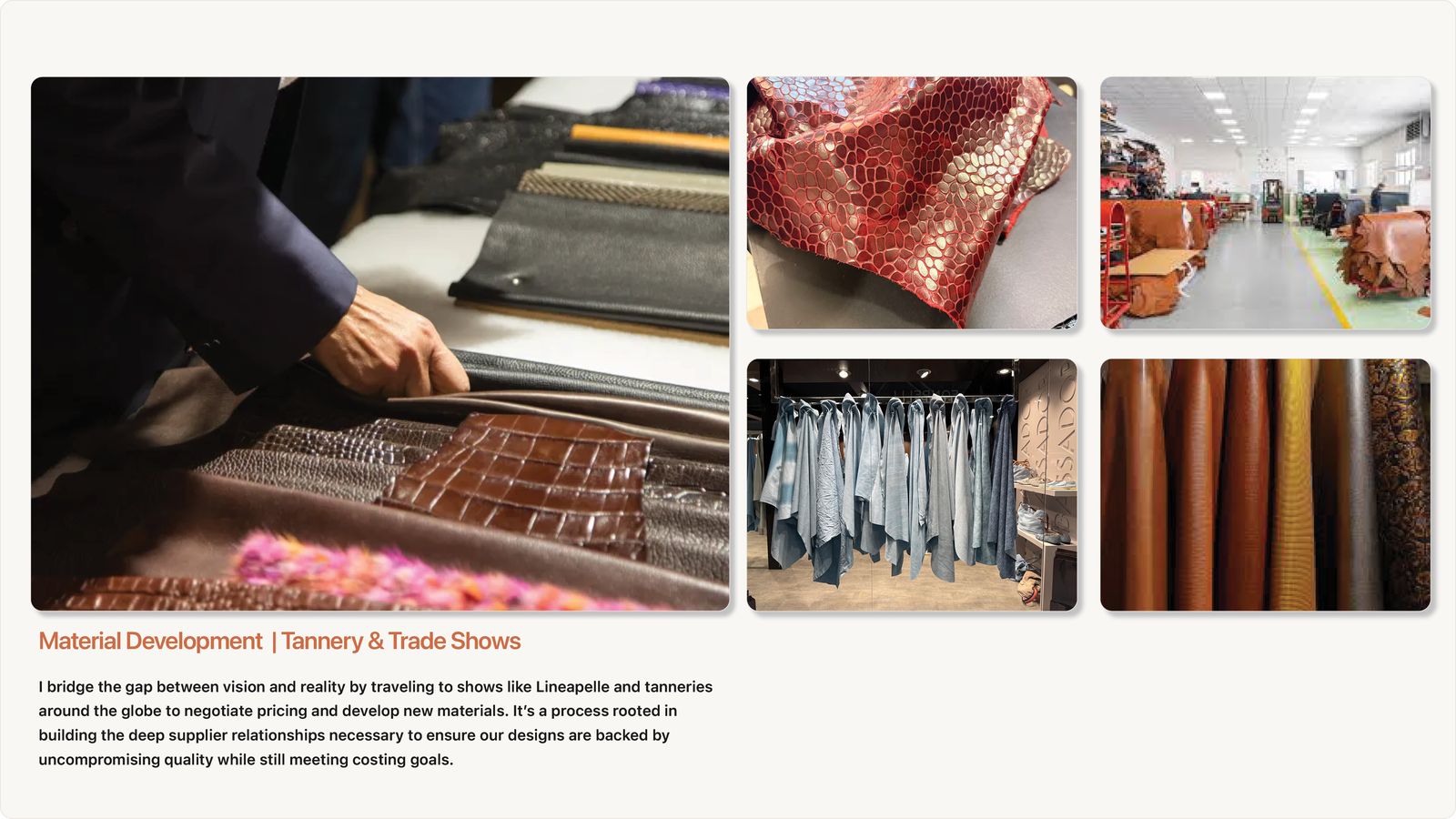
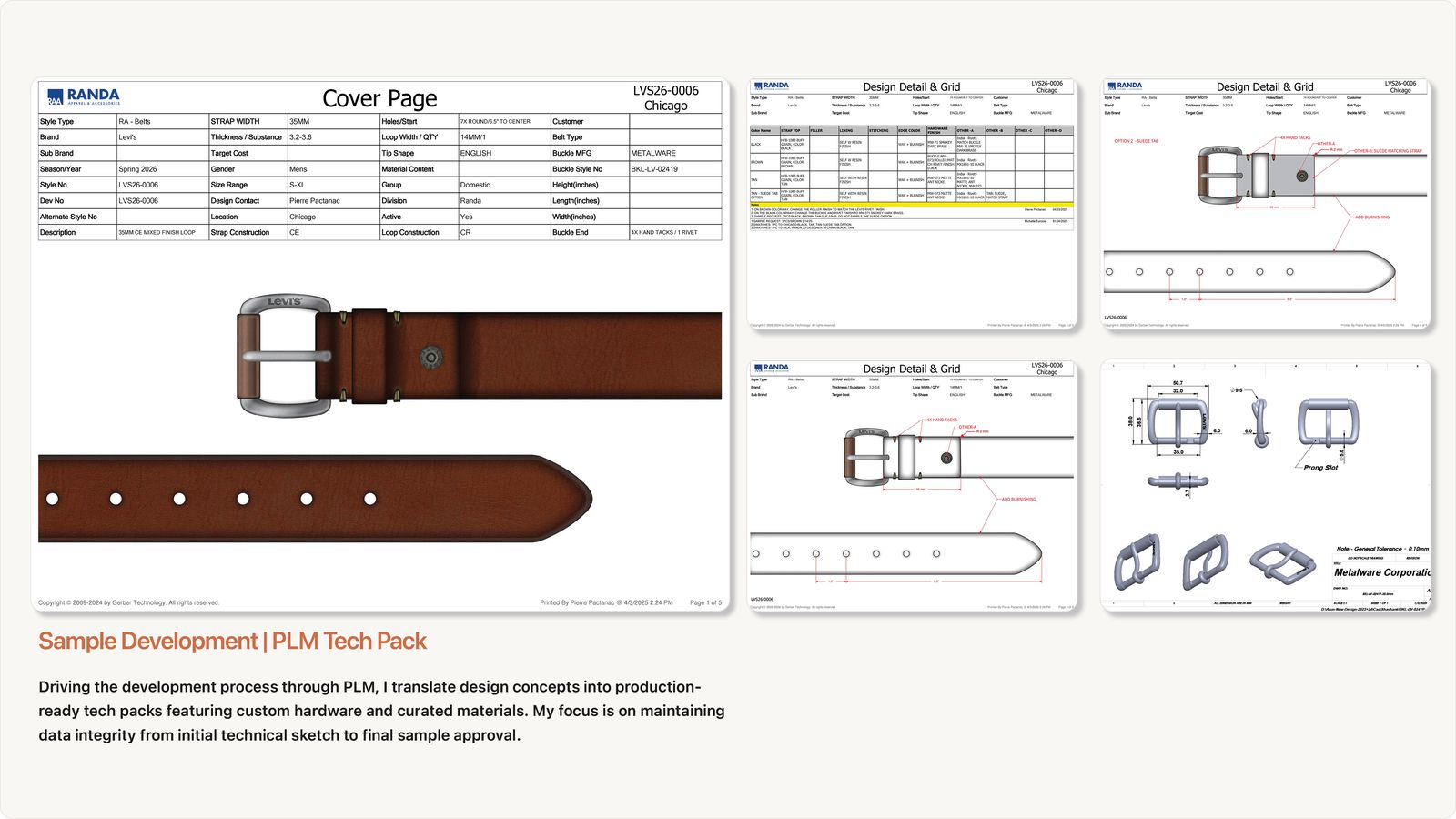
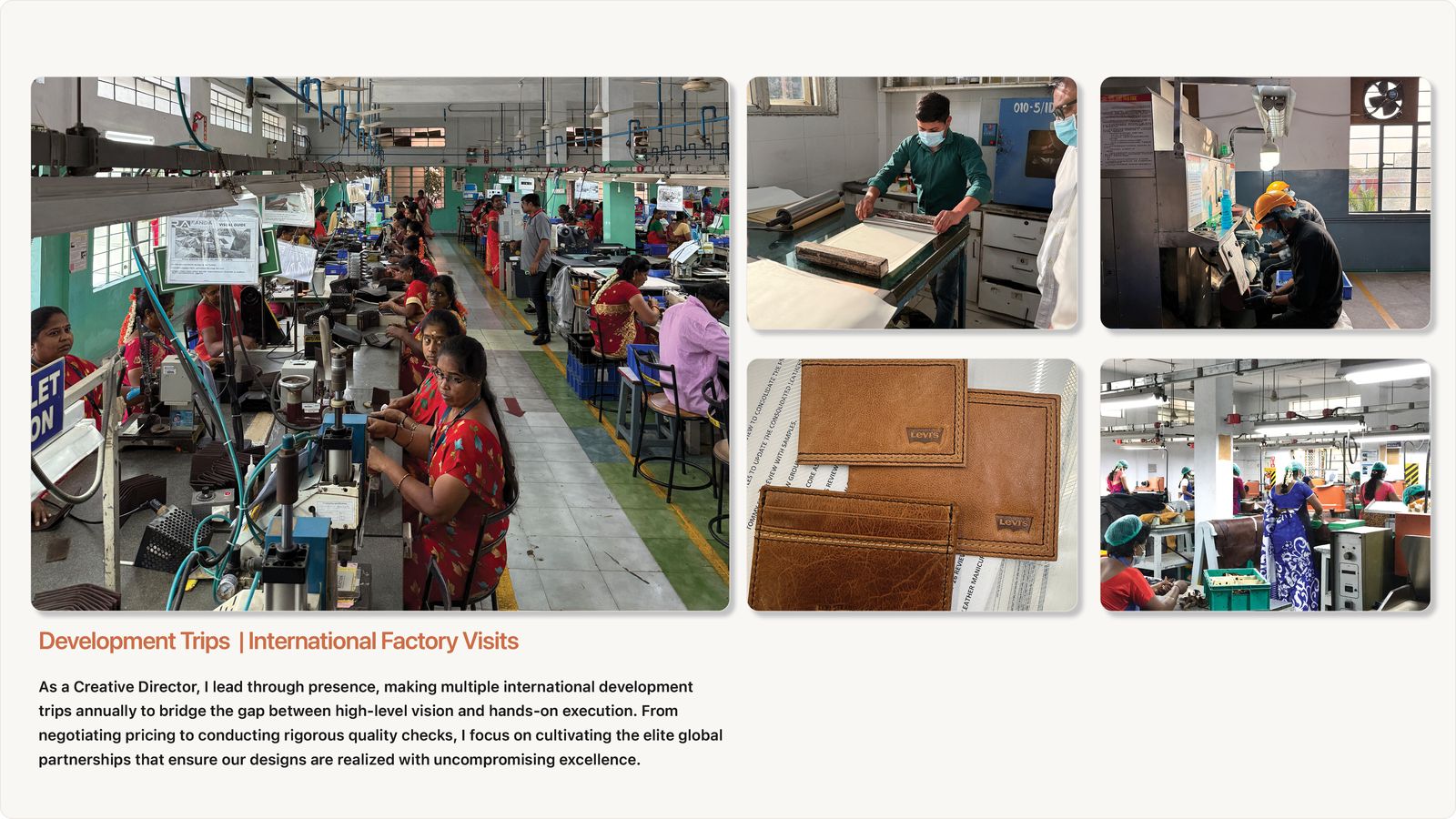
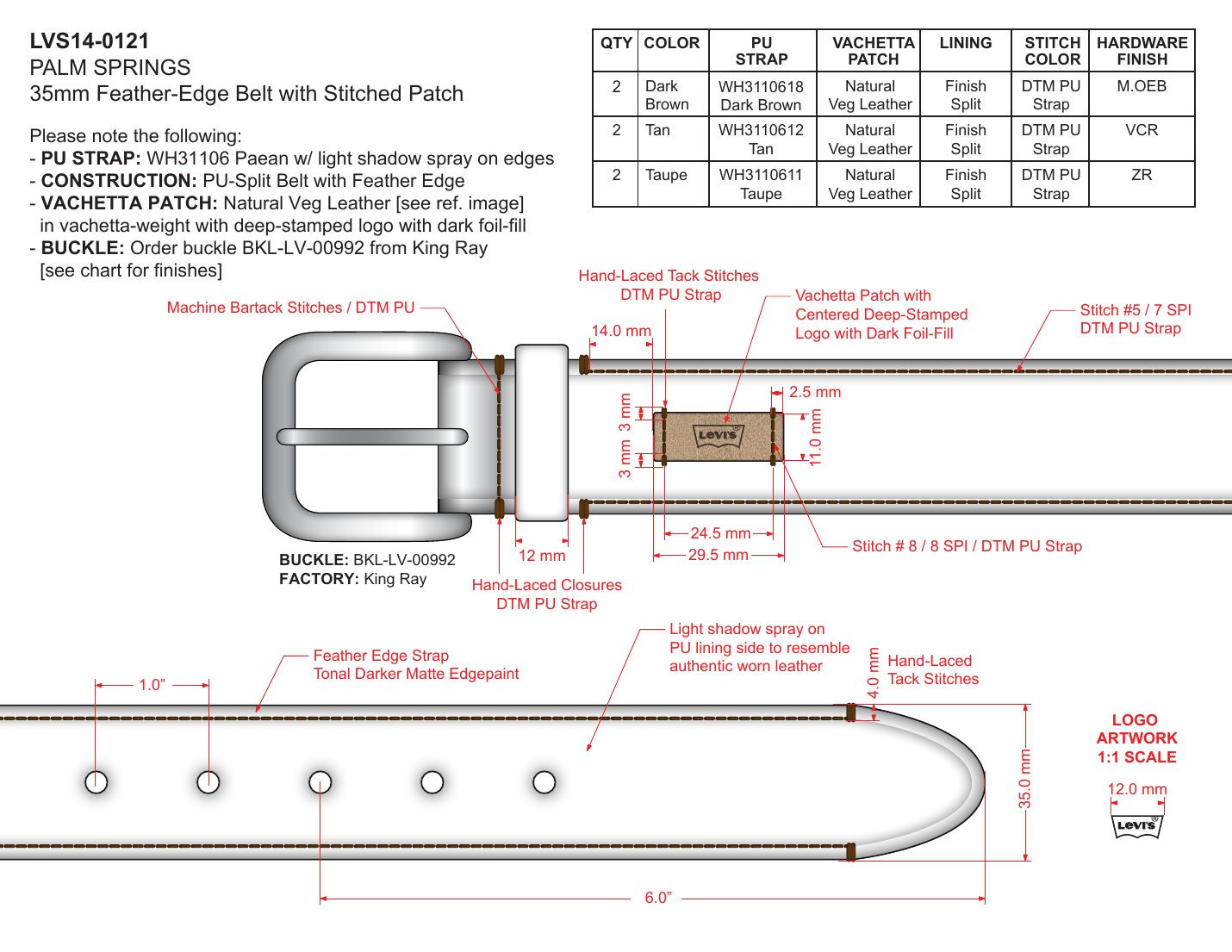
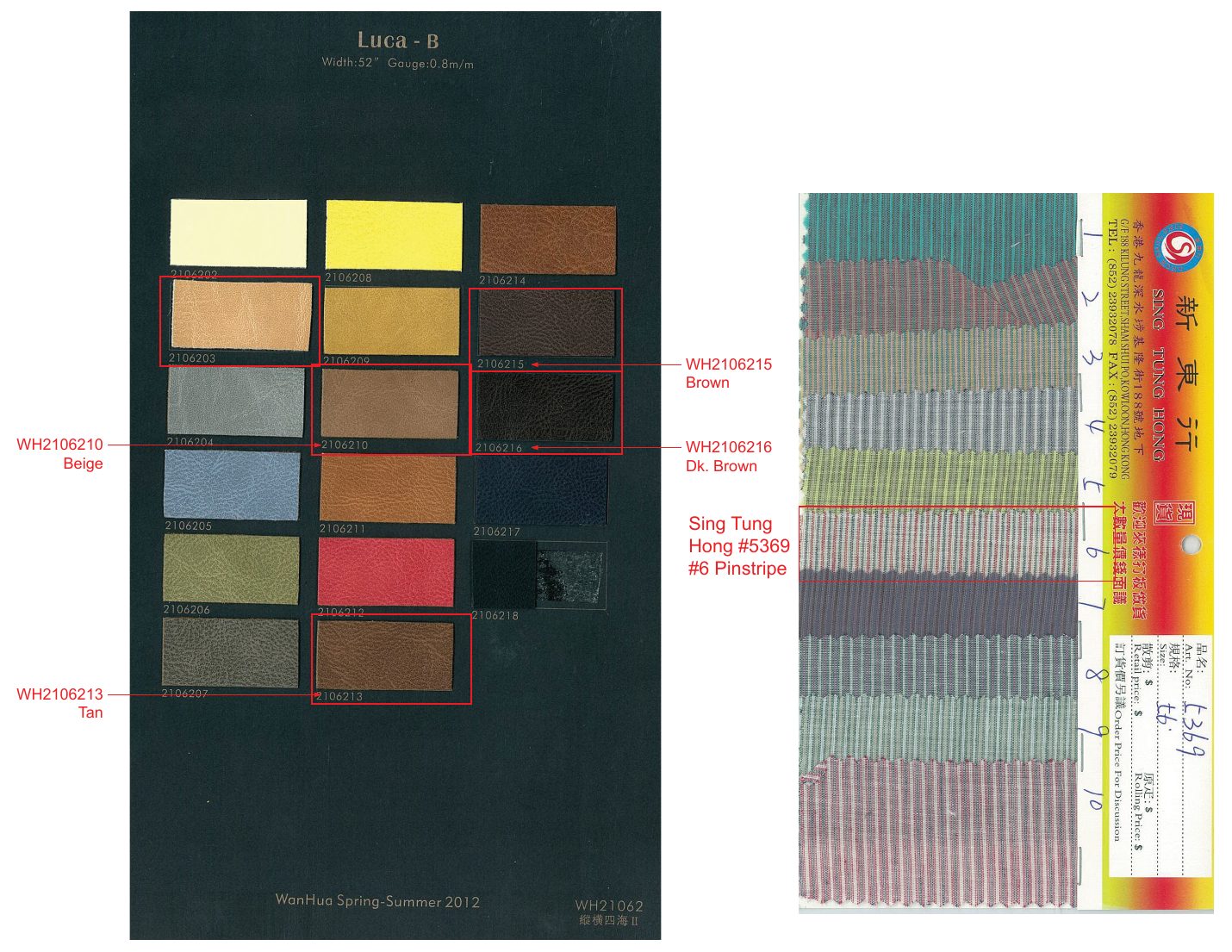
I worked with technical teams to turn designs into tech packs with precise specs, responsibly sourced materials and realistic factory timelines, then led the team through samples and product review with each licensed brand.
One style, CAD to sample
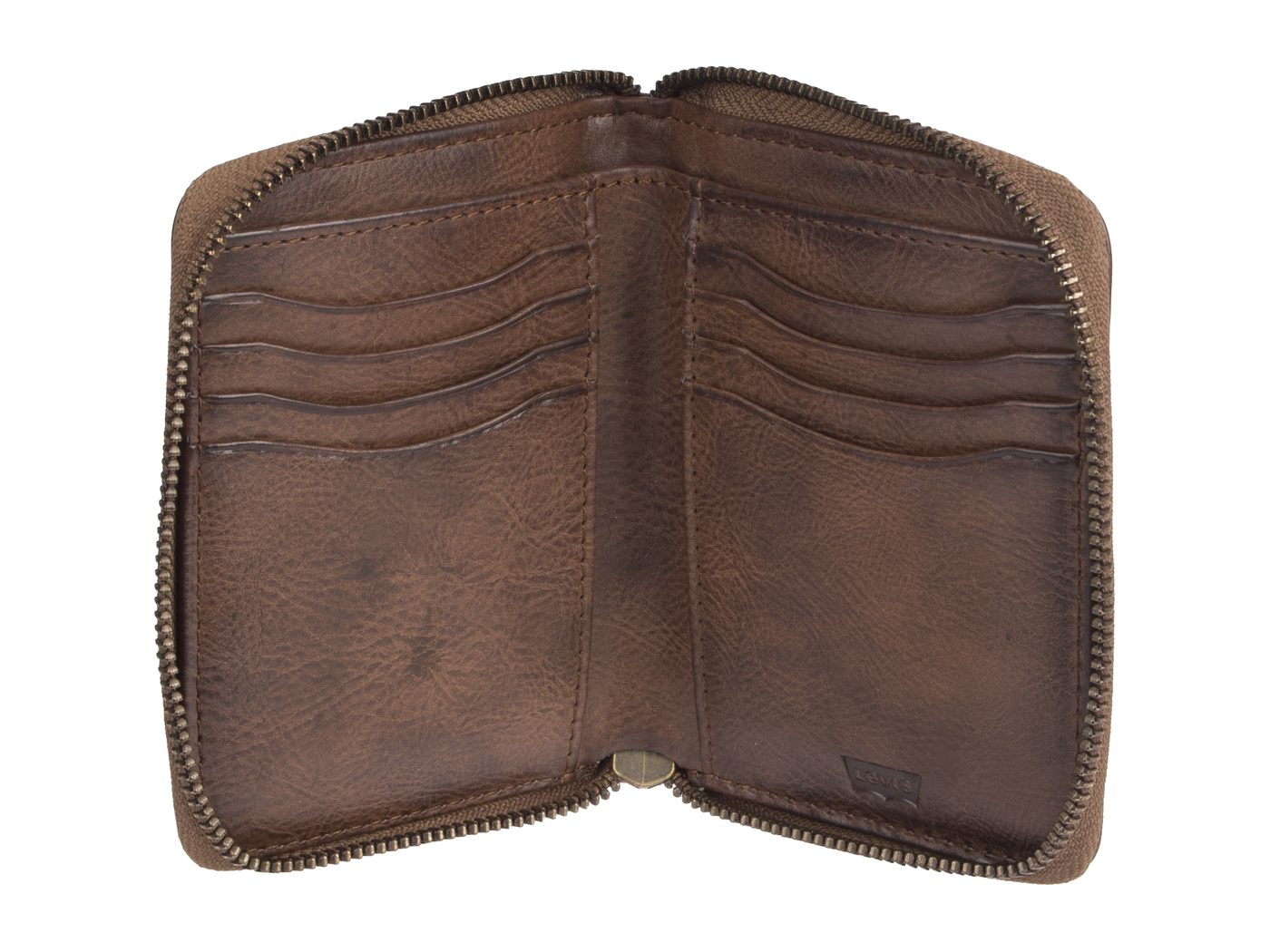
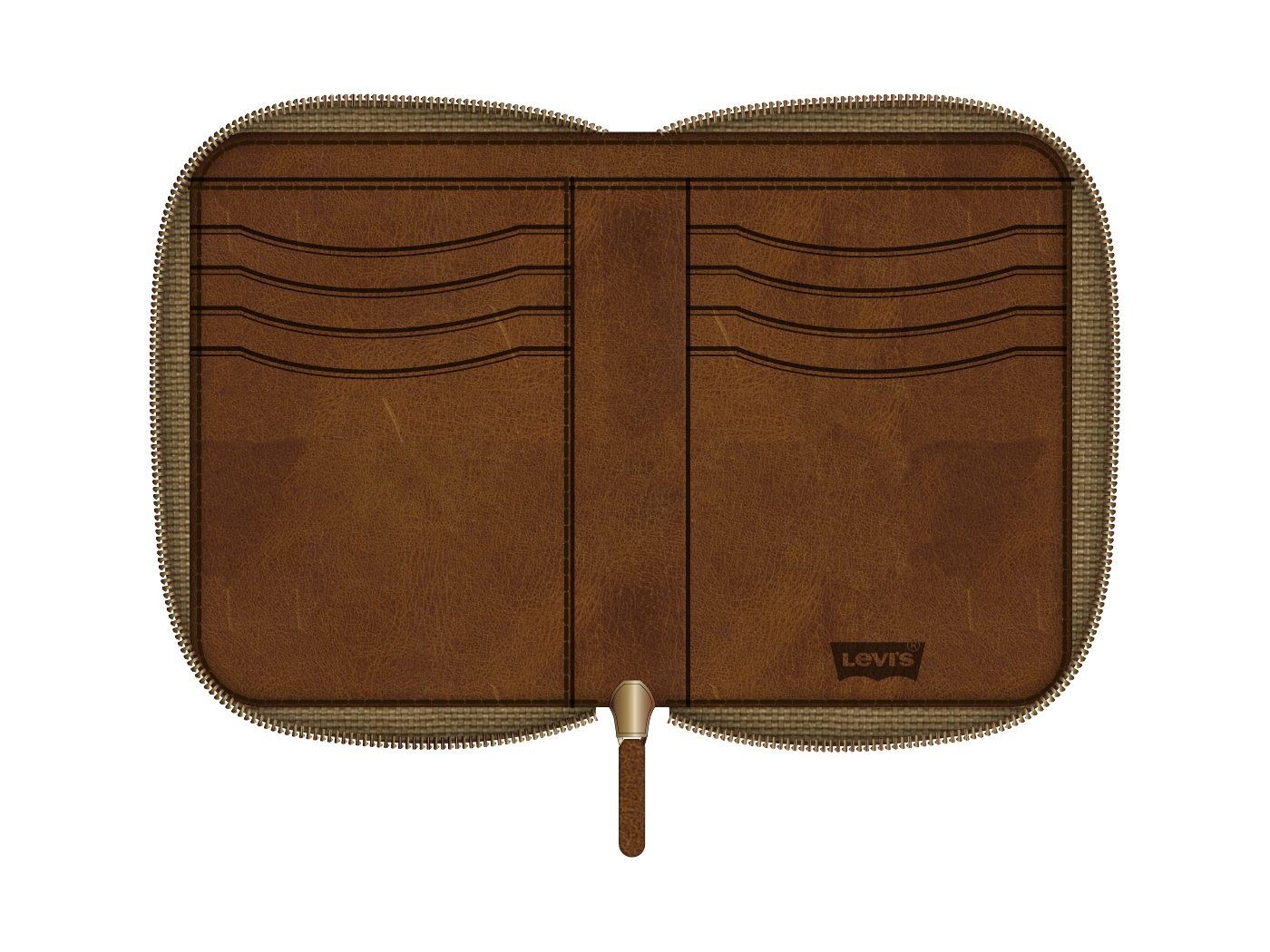
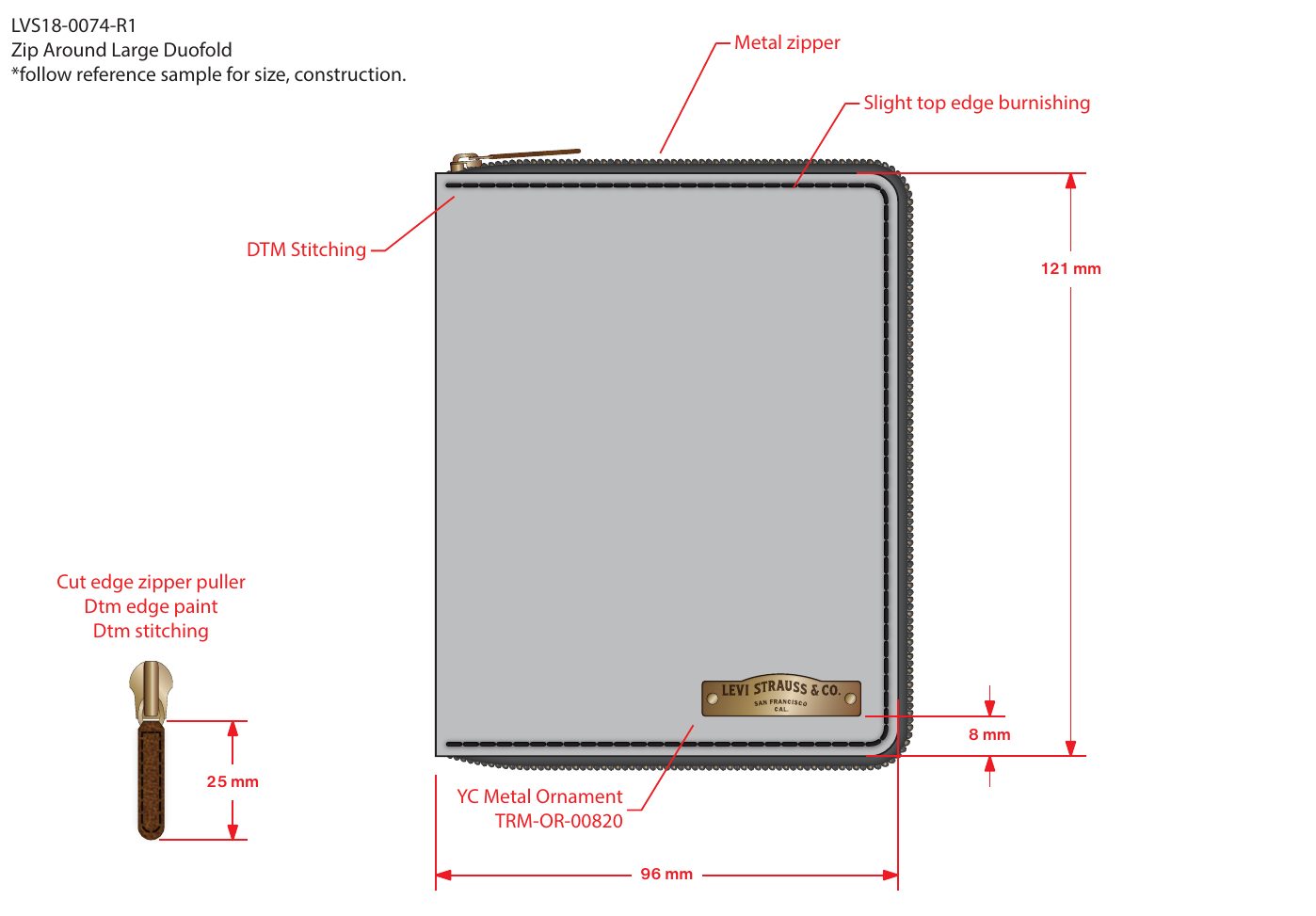
A Levi’s zip-around wallet shows how that works. The spec set the zipper, edge finish, metal ornament and pocket layout, with notes for the factory where a reference sample showed the construction better than a drawing could. The finished sample came back matching the CAD.
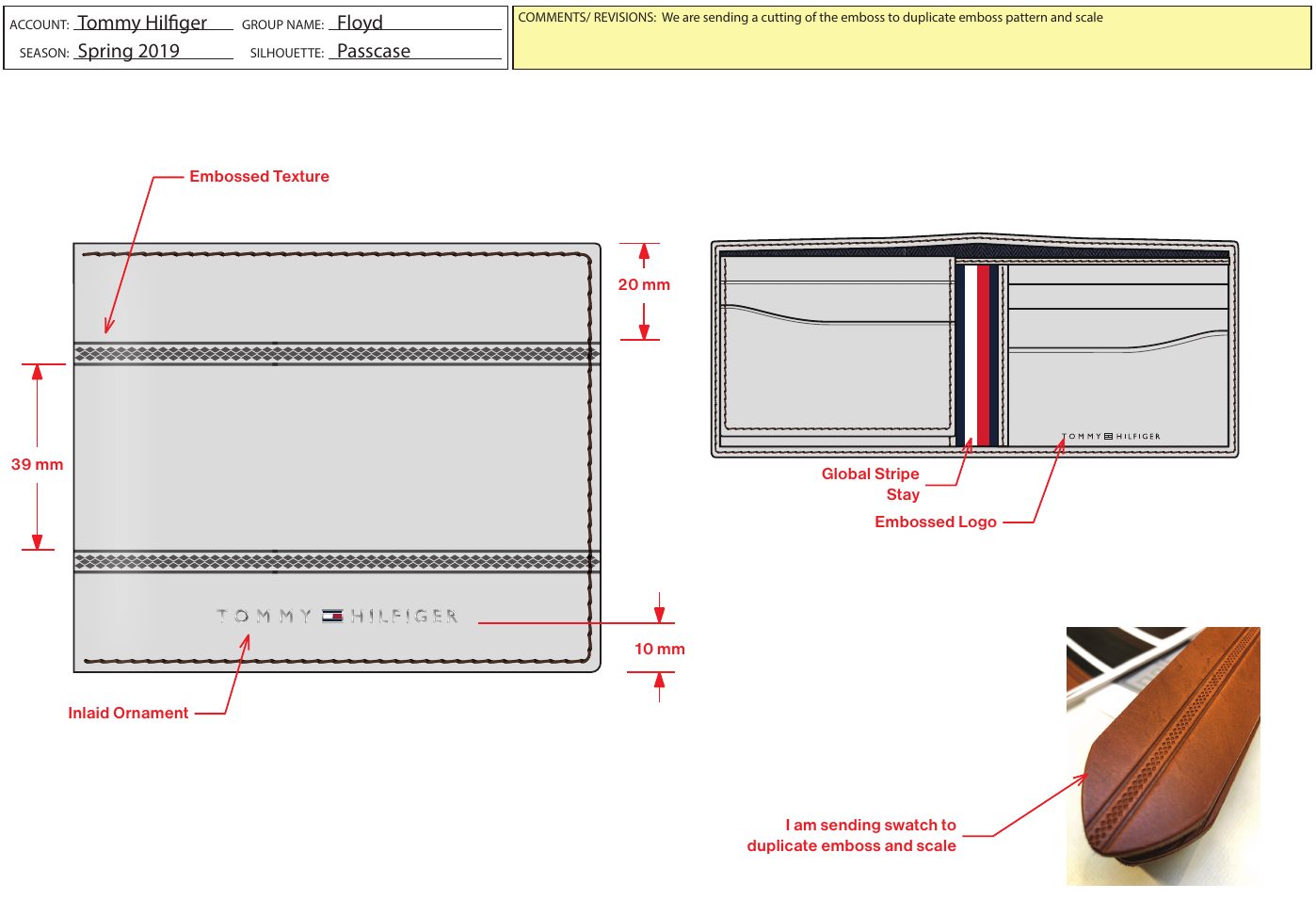
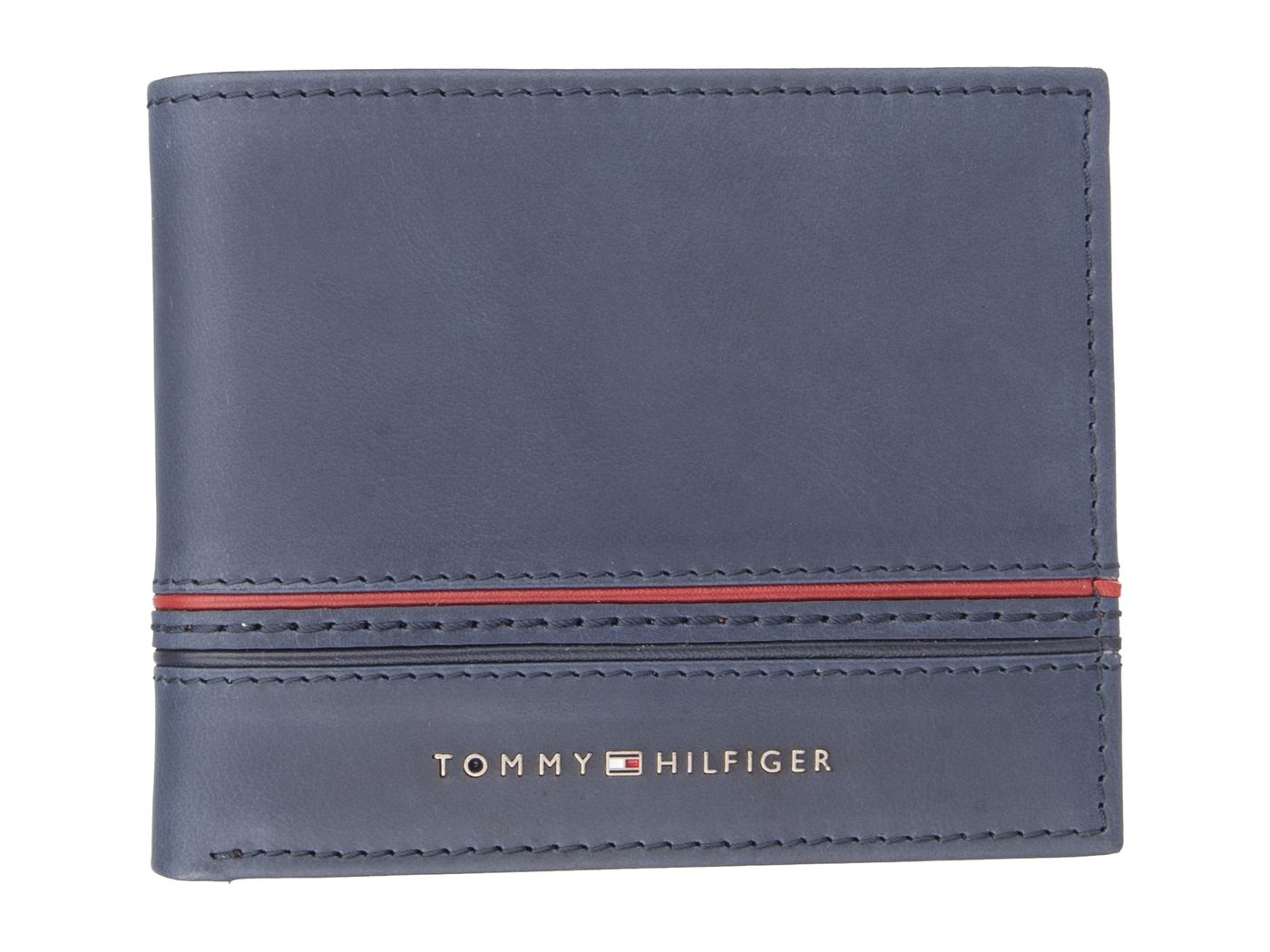
Belts and leathersA belt spec and a leather color card
An idea that can’t be produced on the calendar and at the cost isn’t finished yet.
On design leadership
Photoshoots, lookbooks and market presentations
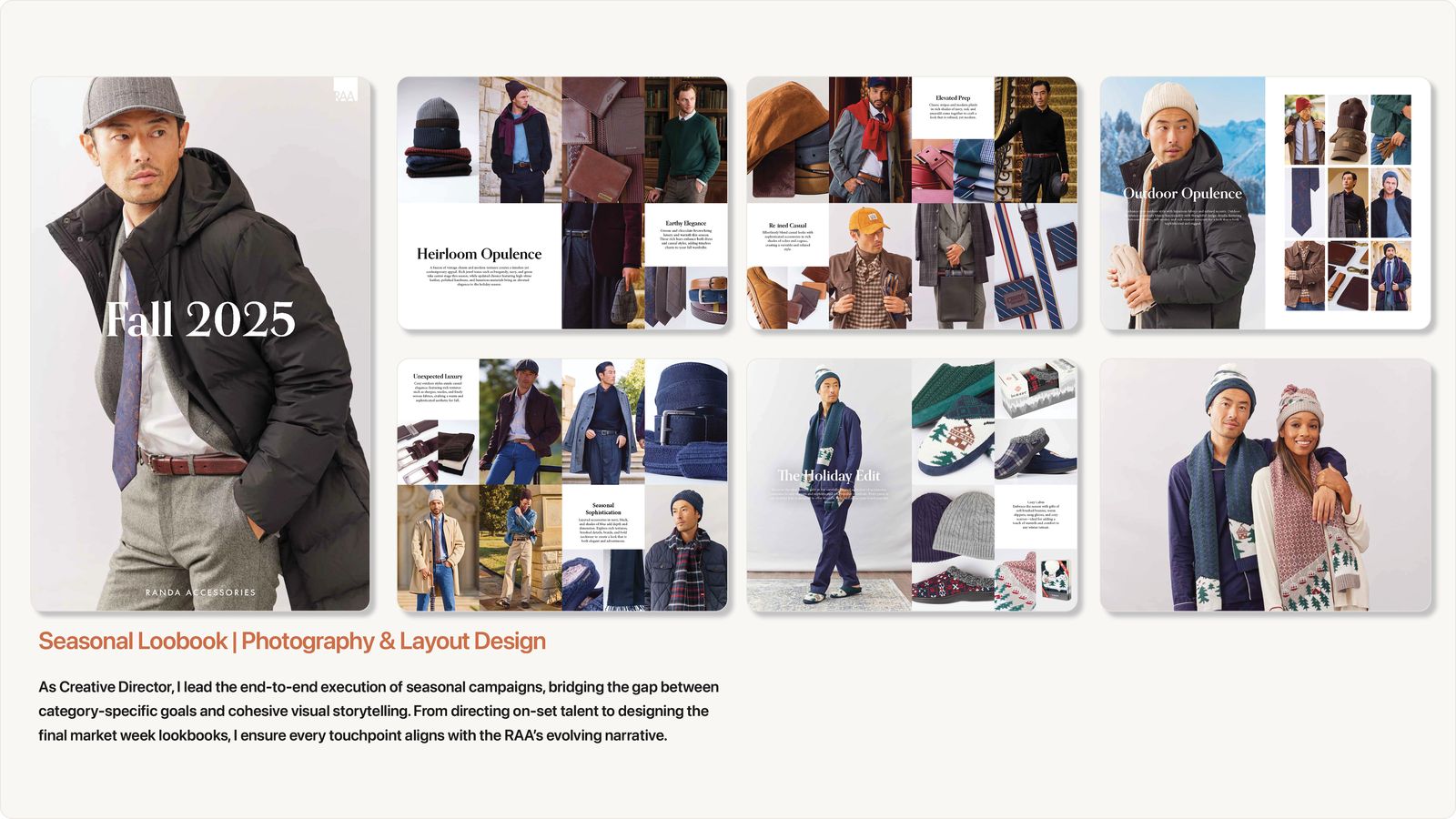
Before market, I co-directed the season’s photoshoots with the women’s team director, handling creative direction and styling on location or in the studio.
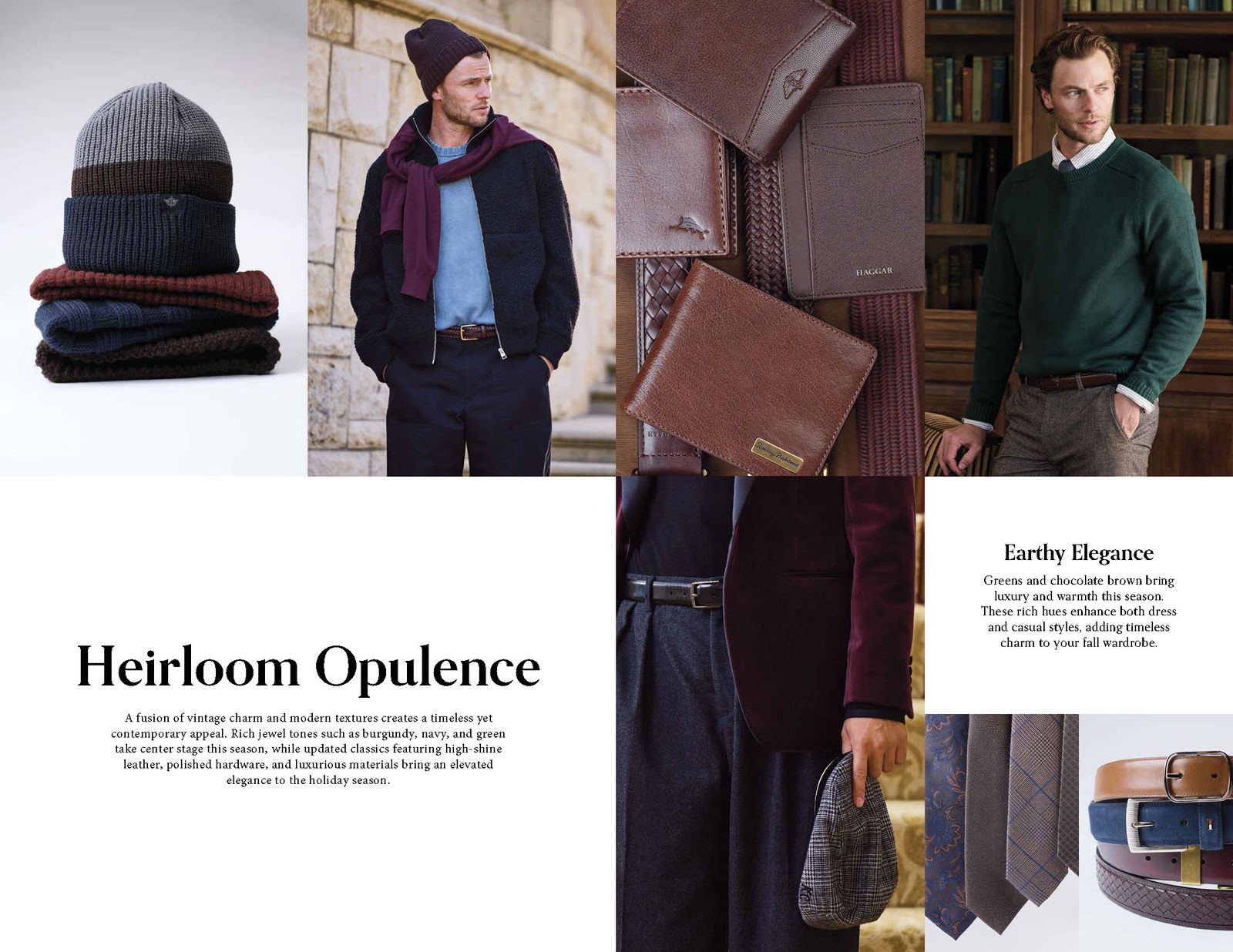
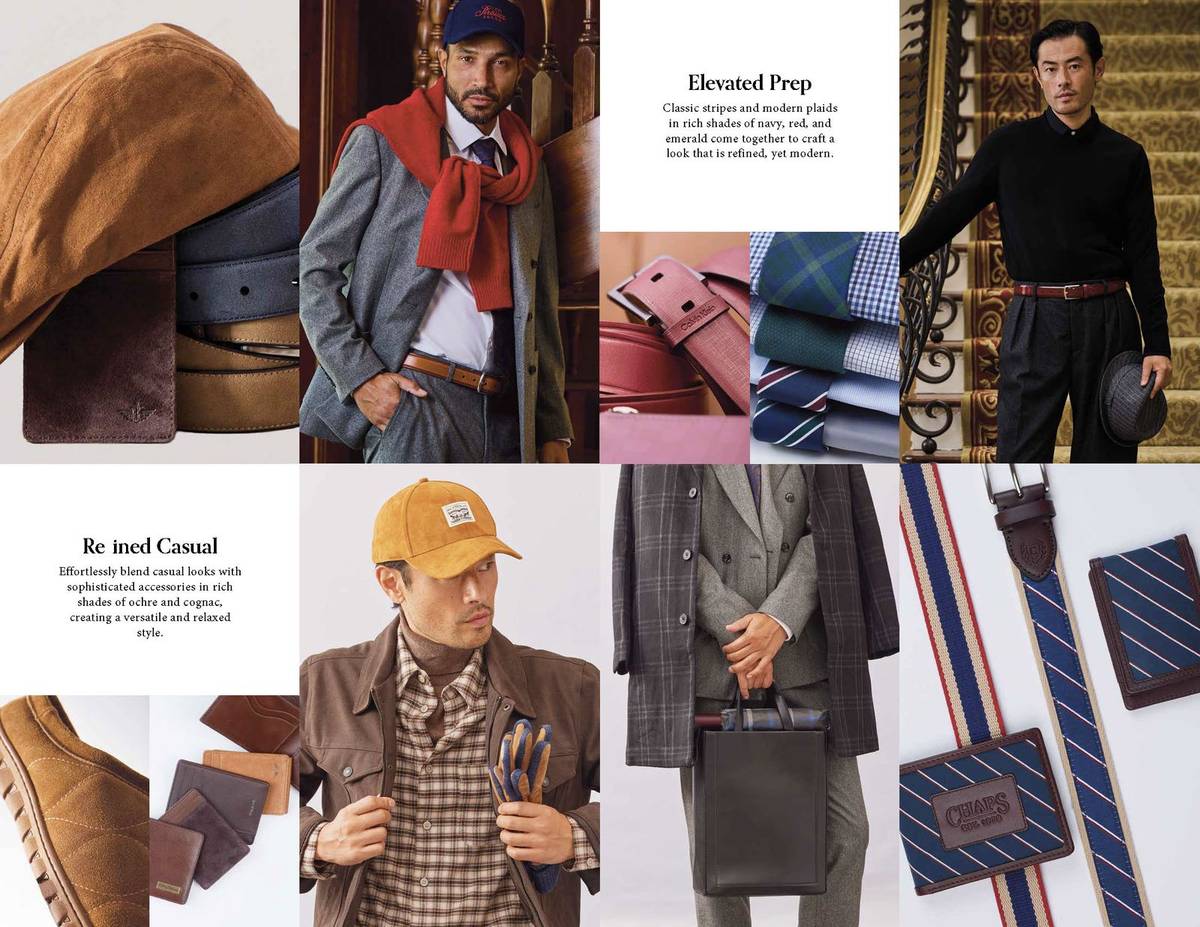
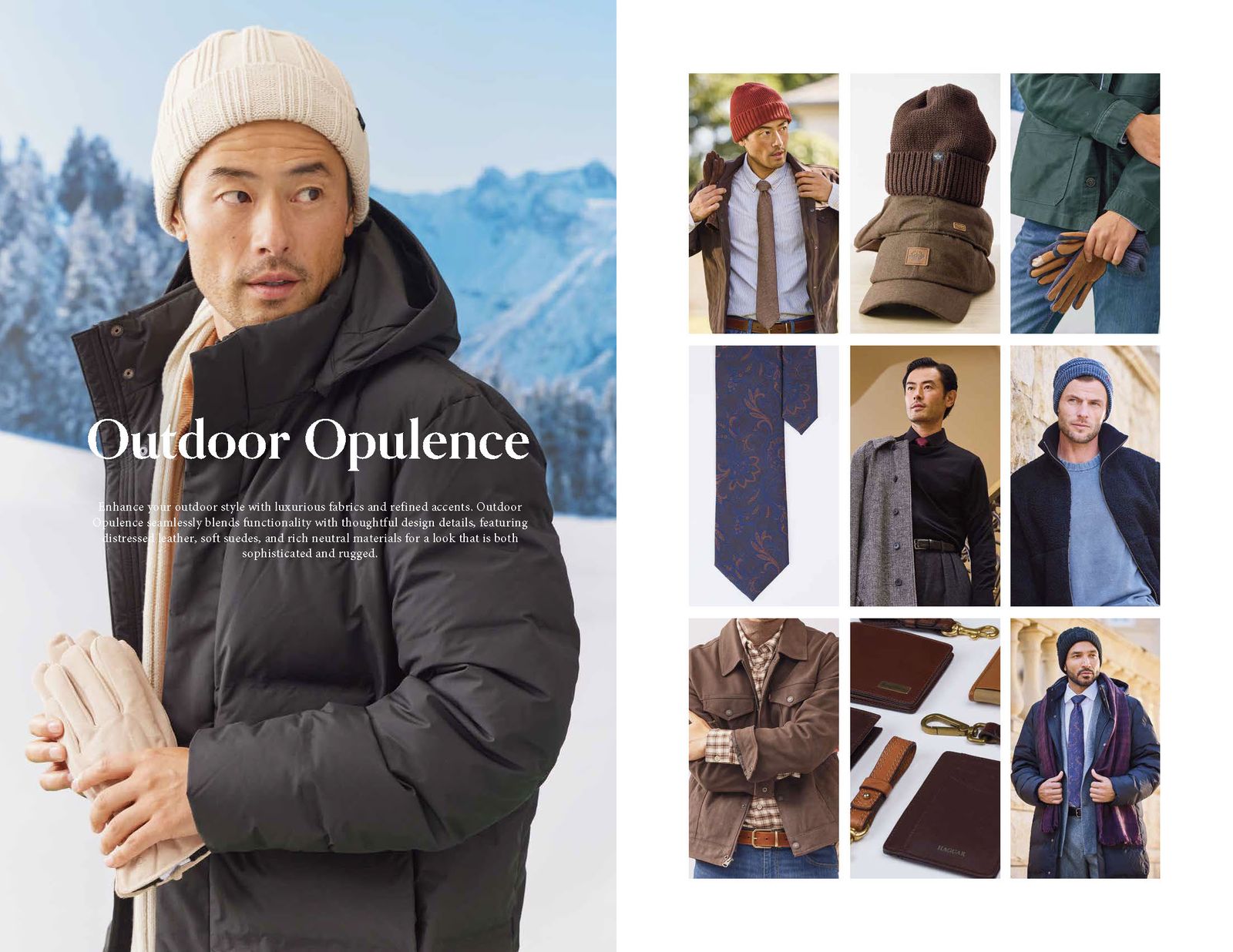
The images from the photoshoots were used in our New York showrooms, in management decks and in seasonal lookbooks that were printed and distributed to buyers. I also provided creative direction for the final presentations to buyers at market, so what they saw matched the work the design team had built.